Varanasi Trip in Monsoon ,Complete Varanasi monsoon trip guide 2026. Is it worth it? Honest risks + rewards. Packages 20–40% cheaper (₹6,000–₉,000). Full weather, safety & itinerary guide. WhatsApp now!
If you’ve been asking whether a Varanasi trip in monsoon is worth it, this is the most honest, most complete answer available in 2026. As the monsoon clouds gather over Varanasi, a unique transformation begins. The ancient city takes on a new life under the rhythmic patter of rain. The lush greenery, the fragrant earth, and the serene Ganges River create an enchanting backdrop that invites travelers to experience its beauty in a different light.
But this is also a guide that tells you the full truth — including the genuine risks that most travel blogs understate. Monsoon Varanasi is not for everyone. For the right traveler, it is the most atmospheric, most affordable, and most authentically local version of the city available in the entire year.
Quick Price Summary — Monsoon Varanasi 2026
During monsoon and summer months, tour packages can be 20–40% cheaper. A package that costs ₹15,000 in November might be available for just ₹9,000 in July. Off-season packages during monsoon (July to September) can be significantly cheaper, sometimes by 20–30%. Budget 2-day monsoon package: ₹3,000–₀4,500 per person. Standard private 2N/3D monsoon: ₹6,000–₀9,000 per person. All major temples: completely free regardless of season. Ganga Aarti: every evening without exception, rain or shine.
Monsoon Varanasi — The 5 Genuine Rewards
1. Dramatic Visual Beauty
During the monsoon, Varanasi transforms into a lush landscape, with the Ganges swelling and the ghats glistening under the rain. The air is filled with the earthy scent of wet soil, mingling with the aroma of street food wafting through the narrow lanes. This season not only rejuvenates the environment but also brings a sense of tranquility, making it an ideal time for introspection and exploration. Cloudy skies create dramatic reflections over the Ganges, making monsoon a great time for river and ghat photography.
2. Authentic Local Atmosphere — No Tourists
Monsoon (July–September): humid but green, off-season discounts and fewer tourists. The temples are less crowded, the ghats belong to local devotees rather than tour groups, and the city operates at its most genuinely authentic rhythm — the Varanasi that locals live in, not the Varanasi performed for visitors.
3. Package Prices 20–40% Lower
Early September or late March offers the best balance — lower prices with relatively decent weather. The monsoon price reduction across every package component — hotel, cab, boat, guide — makes September the single most cost-efficient month for standard and premium package travelers wanting peak-season quality sites at off-season rates.
4. Festival Energy — Teej and Savan Month
Monsoon in Varanasi is not just about rain — it’s also a time for celebration. The city hosts several festivals, including Teej, which celebrates the monsoon and the bond between married couples. The streets come alive with music, dance, and colorful decorations. Savan month — the most sacred month for Shiva worship — falls in July–August, making this the most devotionally charged temple atmosphere available at Kashi Vishwanath outside of Mahashivratri.
5. Boat Rides Still Operate
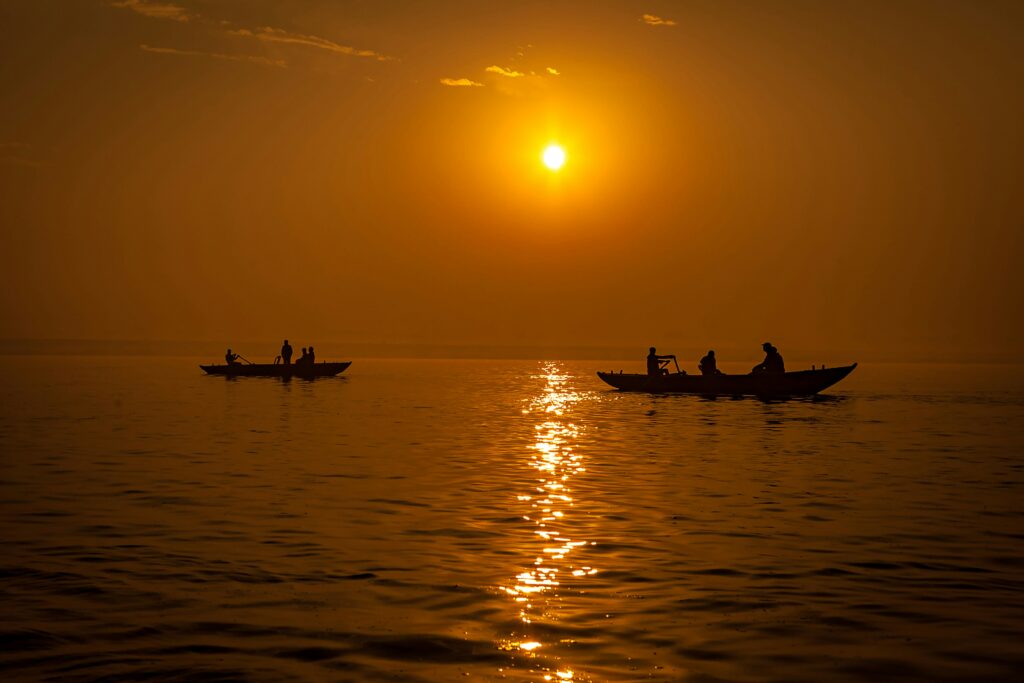
During monsoon season, experienced operators monitor water levels and weather conditions closely, canceling trips only if conditions aren’t optimal. Sunrise and sunset boat experiences remain available in monsoon. Dramatic monsoon light creates extraordinary photography conditions for experienced photographers.
Monsoon Varanasi — The 5 Genuine Risks
Risk 1 — Slippery Ghats
Persistent rain makes ghats slippery — a fall hazard for seniors. Flooding can restrict access to temples and riverside areas. The ancient stone steps of Varanasi’s ghats become genuinely treacherous when wet — not metaphorically but physically. Rubber-soled shoes, slow movement, and a guide who knows which sections to avoid are all essential.
Risk 2 — Flooding and Access Restrictions
Some ghat steps may be submerged during monsoon. Flooding can restrict access to temples and riverside areas. The Ganges rises dramatically during July–August — some lower ghats become inaccessible, some riverside temples partially flood, and the boat boarding points shift. TripCosmos guides manage all navigation in real time.
Risk 3 — Health Risks — Mosquitoes and Humidity
High humidity exacerbates breathing difficulties for those with respiratory conditions. Mosquito populations surge, increasing dengue and malaria risks. Anti-mosquito measures — repellent, full-sleeve clothing for evenings, and verified accommodation with window screens — are essential, not optional, during monsoon Varanasi.
Risk 4 — Travel Disruptions
Monsoons (July–September) bring heavy rain and humidity which may disrupt temple or ghat plans. Outdoor ceremonies occasionally pause during heavy rain — though the Ganga Aarti continues regardless of weather.
Risk 5 — Not Recommended for Senior Travelers
Monsoon (July–September) brings humidity and rain making movement difficult. Unless you have profound personal reasons for visiting during monsoon, postponing your trip to the winter season makes better sense for senior citizens.
Who Should Visit Varanasi in Monsoon — Honest Recommendation
Go in monsoon if: You are a photographer wanting dramatic light and reflections. You are a budget traveler wanting 20–40% savings. You are visiting during Savan month for Shiva devotion. You are a repeat Varanasi visitor wanting the authentic off-season experience. Avoid monsoon if: You are a first-time visitor wanting the complete Varanasi experience. You are traveling with elderly parents or young children. You have respiratory conditions or mobility limitations. You want guaranteed outdoor circuit completion without weather disruption.
📲 Book Your Monsoon Varanasi Package Today!
TripCosmos structures tailored travel packages based on seasonal experiences — from morning aartis in January to festive firework boat rides in November. Indoor experiences during monsoon: classical music sessions, temple discourses, art workshops.
👉 Click Here to WhatsApp TripCosmos — +91 93361 16210 — Instant Monsoon Package Confirmation
FAQs: Varanasi Trip in Monsoon
Q1. Is Varanasi worth visiting in monsoon?
The monsoon season in Varanasi offers a unique blend of spirituality, culture, and natural beauty. Embrace the tranquility, indulge in local flavors, and immerse yourself in the vibrant traditions. Worth it for photographers, budget travelers, and Savan month devotees — not recommended for first-time visitors or seniors.
Q2. How much cheaper are Varanasi packages in monsoon?
Tour packages can be 20–40% cheaper during monsoon. A package that costs ₹15,000 in November might be available for just ₹9,000 in July.
Q3. Are boat rides available in Varanasi during monsoon?
Yes — experienced operators monitor water levels and weather conditions closely, canceling trips only if conditions aren’t optimal.
Q4. What is the best month to visit Varanasi in monsoon?
Early September offers the best balance — lower prices with relatively decent weather. Savan month (July–August) for devoted Shiva pilgrims.
Q5. How do I book a monsoon Varanasi package with TripCosmos?
WhatsApp +91 93361 16210 with your dates, group size, and budget. Monsoon-specific itinerary with indoor alternatives confirmed within minutes — Book Now!